







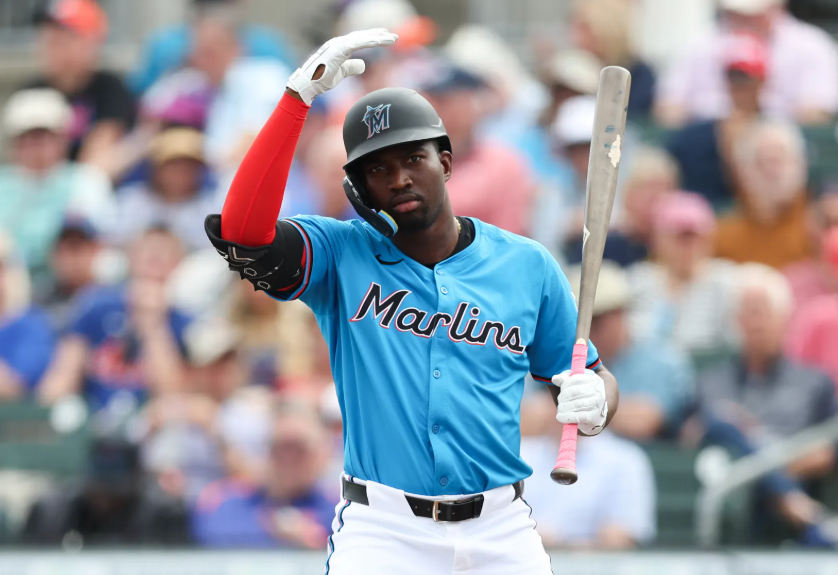
Dillon Dingler didn’t even wait for the crowd to react. The Tigers’ catcher hopped up and tapped his helmet twice. A borderline fastball, which nicked the outside edge, was called a ball. The scoreboard flashed the graphic of baseball’s newest automated ball strike system, overturning the call made by the umpire. For the first time in Major League Baseball history, the strike zone is not entirely in the hands of the umpires. This system, also known as ABS, is designed to improve the consistency of umpire calls along with eliminating any human error. Prior to this season, ABS was tested in minor league play, specifically Triple-A and Single-A. Since 2021, the MLB has gathered data on accuracy, pace, and player feedback to determine if ABS could have the impact they believed it could.
How does ABS actually work?
The automated ball-strike system functions through a combination of cameras, radar tracking, and advanced software to determine the location of every pitch that crosses home plate. The devices work together to create a three-dimensional model of the strike zone and even adjust to hitters based on their height and stance. This ensures more accuracy for every batter. As of now, every team is granted two challenges per game and retains them if successful. For example, if a hitter believes a strike call missed the plate, he can tap his head twice, signaling to the umpire he is challenging the location of the pitch. This structure was implemented to balance technology and strategy throughout all nine innings.
Team strategy under ABS
As the season advances, players have already been adapting to this new system, forcing them to rethink their approach before every at-bat. Teams have been seen being very selective with challenging balls and strikes early in the game. This strategy is used so that they have that “advantage” later, in close games. Looking around the majors, as of right now, the Minnesota Twins have been able to benefit the most from the ABS system. The twins have already accounted for saving +4.0 runs of value and even hold the current record with nine challenges in one game. Their strategy is the opposite and consists of being aggressive early and often. Twins manager Derek Shelton stated, “We told our catchers to be aggressive and go after it because it’s a learning experience for all of us.” This approach has positioned the Twins as one of the first teams to truly understand how to turn ABS into a competitive weapon.”
Statistical success among players
When it comes to actually challenging pitches, the league average of successfully overturning a pitch sits at around 53%. Catchers seem to have the advantage in success rate. The success rate for a catcher challenge is 60-64%, exceeding batter challenges, which are around 46 percent. Some hitters have actually been very successful early in the year, such as Padre’s shortstop Xander Bogaerts (~85%) and Blue Jays top utility player Davis Schneider (~83%). These players have been able to maintain a high success rate as hitters by focusing on pitches off the outside edge of the plate.
Through early April 2026, roughly 1,050 challenges were made, with 54% initiated by catchers. This is not surprising, given that catchers have the clearest perspective when determining whether a pitch is a ball or a strike. Catchers such as Dillon Dingler of the Tigers and J.T. Realmuto of the Phillies have consistently been within the 90% range of successful challenges this year. This data not only affects both pitchers and hitters but also affects the scouting report. The growing sample sizes have given more insight to teams around the league on how to approach certain players.
The controversy behind ABS
Not everyone is sold on ABS, not only between hitters and pitchers but also even among the umpires. While players like Francisco Lindor appreciate the added excitement, saying, “I like it… I think it makes the game better.” I think it gets the fans involved a little bit more. ” Others disagree. Blue Jays infielder Ernie Clement voiced his concern: “I think it slows the game down, kind of makes it feel a little less pure in the baseball sense.” Arguing that the human error element is crucial for making baseball unique.
Umpires have their own frustrations when it comes to ABS. Former longtime umpire Gary Darling openly preached, “They’re flipping pitches that are missing by a tenth of an inch, in a system that’s not exact anyway. … As much as baseball wants to define the strike zone, it’s still not defined.” Highlighting that even precision has its own limits. Umpires feel that their own error is being replaced with a system that they believe is imperfect in its own way.
The introduction of the automated ball strike system has already had a major impact on reshaping the majors. Its influence touches almost every aspect of the game—from eliminating human error to shaping how managers script their strategy. Baseball’s newest technology has brought consistency and accountability to the game. As teams and players continue to adjust, it’s clear that ABS is only the beginning of a much larger shift in how the sport evolves.