








Too early to learn?
Every weekday, we wake up before the sun rises. Half-awake, we rush to get ready to go to school, possibly unable to even learn. Starting school at 7 a.m. might seem normal because that’s what we’re used to, but that doesn’t necessarily mean that it works. Early start times affect sleep, focus, and overall health for both students and teachers. The timing of school leaves students fatigued, and teachers are just as affected as students.
The biggest problem with starting school at 7 a.m. is the lack of sleep it generates. Teenagers naturally fall asleep later at night due to their body’s natural cycle, which makes waking up early difficult, according to the Centers for Disease Control and Prevention (CDC). Teenagers need at least 8–10 hours of sleep every night, but only 23–25% of them actually get the required hours. A junior at Urbana says, “I have no time to get ready, I barely managed to catch my bus, and I’m tired all day.”
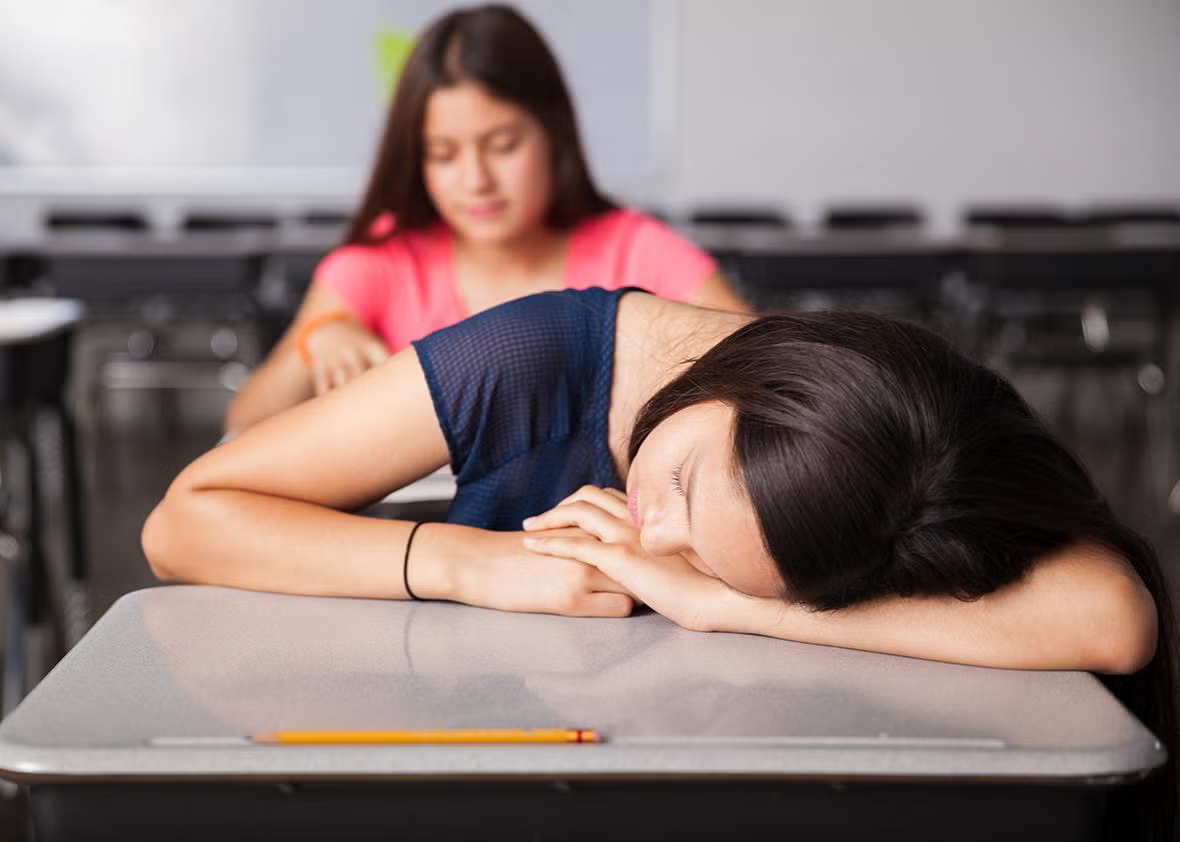
This doesn’t just affect students; students incapable of retaining information, let alone staying awake, leave teachers frustrated and unable to properly do their job. Sleep deprivation in students is such a common thing that teachers are used to “at least 3–4 students falling asleep per class,” a math teacher in Urbana describes her class. Teachers also have to wake up very early, prepare lessons, and stay energized all day, which leads to a dependence on caffeine and a risk of health issues due to stress and burnout. An Urbana counselor said, “I love my job, but getting here every morning is exhausting, and it throws off my circadian rhythm.” How can students stay awake if even the teachers struggle to? If school started later, students and teachers would be more alert, ready to teach and learn.
Schools in California and Florida pushed to start school later and have seen major improvement in the performance of students. Another reason why waking up at 7 a.m. is too early is the busy schedule students and teachers have outside of school. Urbana houses a vast majority of athletes, theater, choir, and instrumental players. These obligations last hours. Many students also have family responsibilities or jobs after school, meaning they couldn’t go to bed early even if they tried. Teachers spend hours grading, planning, and answering emails after school ends. Both students and teachers often stay up late and still have to wake up in the morning. “I have practice until 6, homework after that, and sometimes shifts on the weekend. There’s no way I can go to sleep early, even if I tried,” a junior explains.
Starting school later would not only help everyone succeed, but CDC studies have shown that schools with later start times have better attendance, better grades, and fewer students falling asleep. Getting more sleep is not a luxury; it is something both teachers and students alike need to be able to function. People need to be rested, and when they are, they’re more productive and able to think more clearly. School is a place where people are ready to learn or teach, not a place where everyone’s fighting to stay awake. In the end, starting school at 7 a.m. is too early for everyone; it causes lack of sleep, makes learning harder, and affects everyone’s health and mood. If the education system wants schools to be effective, they’d give people the right to be able to sleep enough to perform.