





JoJo’s Bizarre Adventure: How a Manga from 1987 Took Over the Internet
From viral memes to a live-action film, Hirohiko Araki’s decades-old series has become one of the biggest cultural forces in anime history.
If you have spent any time on social media in the last ten years, you have seen a JoJo reference. Maybe you didn’t know it at the time. But that dramatic pose, that “To Be Continued…” meme, that character is named after a rock band that was JoJo’s Bizarre Adventure.
The manga series created by Hirohiko Araki first appeared in Weekly Shonen Jump magazine in 1987. Almost 40 years later, it is still running. And somewhere along the way, it stopped being just a manga and became a full-on cultural movement.
It is one of the most referenced anime series on the internet, has inspired video games, fashion, and music, and even got its own live-action film. Understanding how that happened says a lot about how global pop culture works today.
What Is JoJo’s Bizarre Adventure?
The series follows generations of the Joestar family; each lead character is nicknamed “JoJo” as they
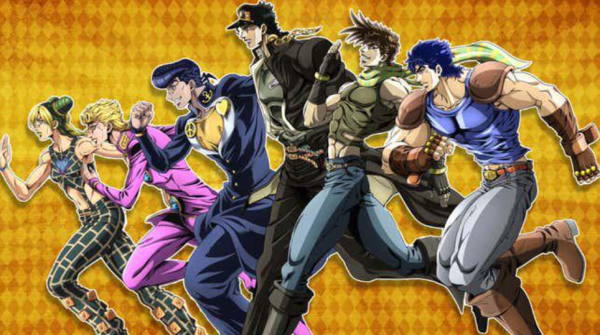
battle supernatural enemies across different time periods and countries.
Part 1 starts in Victorian England. Part 2 jumps to 1930s New York. By Part 4, the story moved to a quiet Japanese town in 1999. Each part feels almost like its own separate show, which is part of what makes the series so unique.
Creator Hirohiko Araki has always pulled from sources all over the world. Character names are lifted from Western rock bands Killer Queen, Sticky Fingers, The Grateful Dead, and AC/DC. Villains are designed with influences from Roman sculptures, Egyptian sphinxes, and Japanese oni.
Writer Alexander Taurozzi described this approach in a Medium article as creating “cultural chimeras,” characters that mix visual and cultural references from across history. According to Araki, his villain designs were inspired by Roman statues, Egyptian sphinxes, and Japanese nio statues, contributing to their distinctive, almost divine physical beauty.
That global DNA is a big reason why the series connects with people everywhere, not just in Japan.
The Meme That Changed Everything
Ask someone who has never seen JoJo to name something from it, and there’s a good chance they’ll say the “To Be Continued” meme.
The meme works like this: something dramatic or embarrassing happens, then the screen freezes and the opening notes of “Roundabout” by the band Yes play as the words “To Be Continued” appear with an arrow. It is the exact format the anime uses at the end of cliffhanger episodes.
Fans took that format and ran with it. The meme spread across Twitter, Instagram, Reddit, and TikTok and became one of the most recognized formats in internet history.
According to a pop culture analysis by writer Diego on Medium, the meme got so big that Seth MacFarlane referenced it in an episode of Family Guy. That is the kind of mainstream crossover most anime series never achieve.
And the “To Be Continued” meme is just one example. Phrases like “It was me, Dio!” and “Oh? You’re approaching me?” became internet staples that people use even without knowing their origin. Often appearing in memes, reaction images, and short video edits on platforms like TikTok and YouTube, where clips from JoJo’s Bizarre Adventure are remixed and shared widely.
Rock Music, Video Games, and Fashion
One of the most unusual things about JoJo is how deeply it is tied to Western rock music.
Almost every major character and ability in the series is named after a band or song. “Killer Queen” is a Queen track. Sticky Fingers is a Rolling Stones album. Crazy Diamond, the main Stand in Part 4, references Pink Floyd. Araki has said in interviews that classic rock was a major inspiration for him growing up.
That connection built a bridge between anime fans and music fans that not many other series have managed. People who had never watched a single episode of JoJo started recognizing the references.
The influence also spread into video games. Multiple major titles, including Street Fighter and Persona, have incorporated JoJo-inspired poses and moves. A dedicated JoJo fighting game, All-Star Battle, became a fan favorite. Even Fortnite added a JoJo-style character skin at one point. Such as exaggerated character poses, dramatic attack animations, and stylized finishing moves that resemble JoJo’s signature art style.
Fashion has felt it too. The series is known for its exaggerated, highly stylized character designs. Araki’s characters wear outfits that look more like high fashion than typical anime characters.
The Live-Action Film
In 2017, acclaimed Japanese director Takashi Miike released JoJo’s Bizarre Adventure: Diamond Is Unbreakable Chapter 1, a live-action film based on the manga’s fourth story arc.
The film starred Kento Yamazaki as protagonist Josuke Higashikata and earned a 100% rating on Rotten Tomatoes from critics, with reviewers calling it “a frenetic party watch” and praising how it captured “the tone and style of its source material.”
Critic Margaret Evans of Starburst wrote that the film “mostly captures the tone and style of its source material,” which, for a series as visually wild as JoJo, is genuinely hard to do.
A live-action adaptation of anime is notoriously difficult to pull off. The poses, the power systems, the bright colors—none of it translates easily to real life. The fact that Miike managed to make something fans and critics both responded to says a lot about how strong the source material is.
Why It Still Matters
JoJo’s Bizarre Adventure has been running for nearly 40 years. It currently has nine story arcs, known as “Parts,” with the most recent being The JOJOLands.
Most long-running series lose cultural momentum over time. JoJo has done the opposite. The internet discovered it, made it into a meme, and then a whole new generation went back and actually watched the show.
What Araki built, a story that pulls from Victorian England, Japanese folklore, and classic rock, turned out to be perfectly designed for a global internet audience that loves references and rewards niche knowledge.
As writer Taurozzi put it in his essay on Araki’s globalization of the series: “Miyazaki once stated that Japanese culture ‘fuses diverse cultural elements into something new.'” That is exactly what JoJo does, and it is exactly why the world keeps coming back to it.
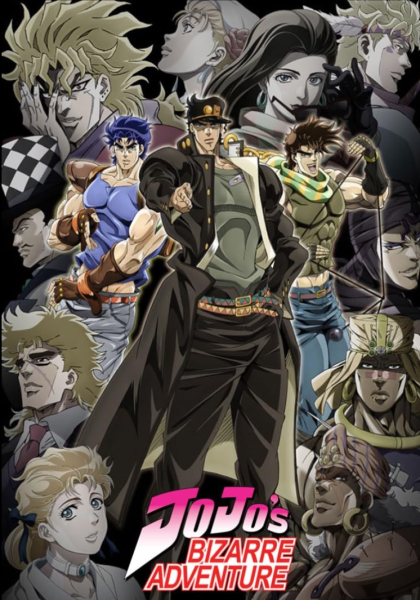
The bizarre adventure, it turns out, is nowhere close to over.
